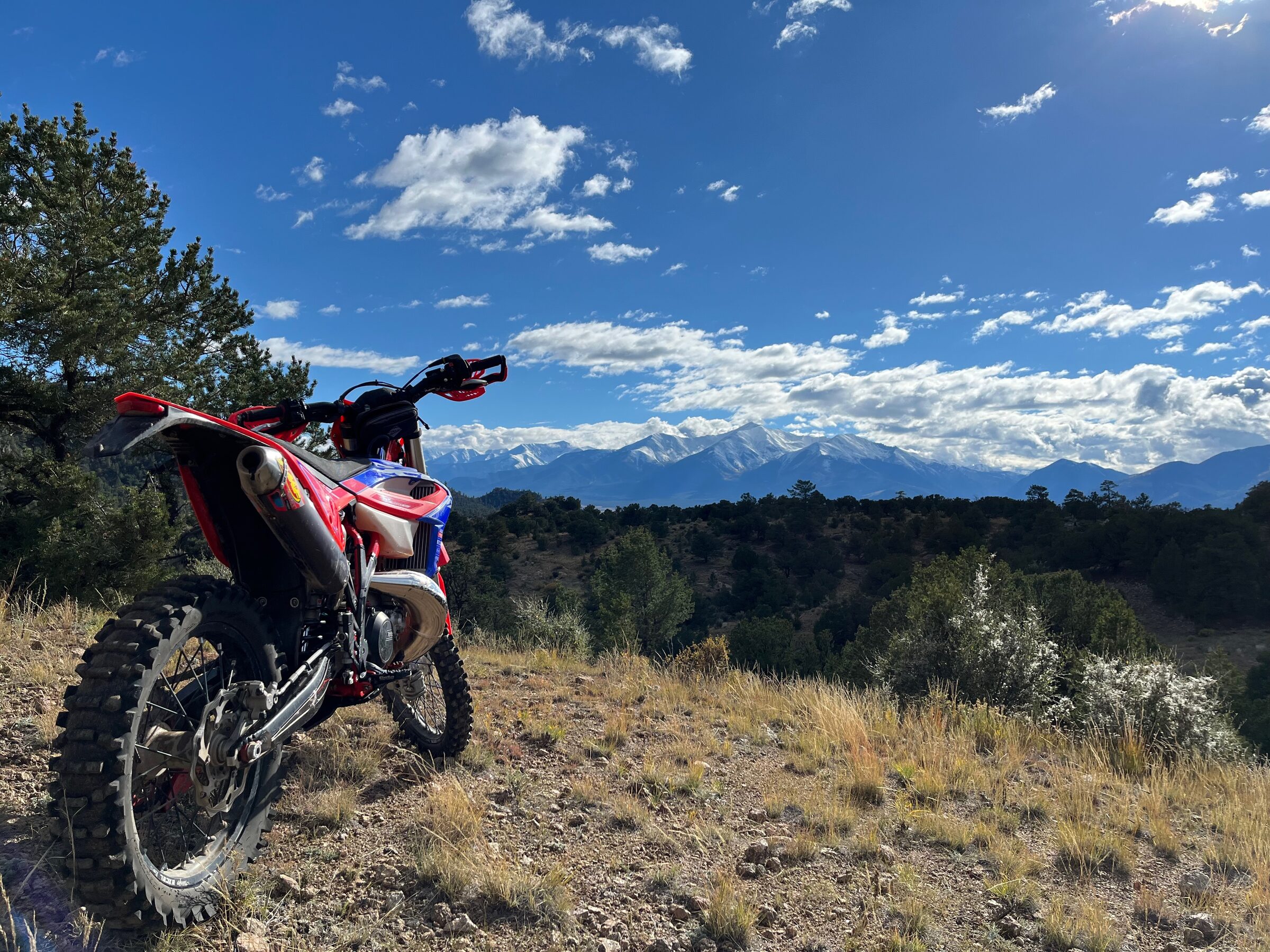
Moab Rim Trail
Moab, Utah
Moab Rim Trail is a short, rugged BLM shared-use route of slickrock ledges and sand above Moab, Utah, open to dirt bikes alongside Jeeps and ATVs.
Moab Rim Trail is a single route rather than a sprawling riding area. It climbs from the edge of town up ramps of Kayenta sandstone slickrock, and the Bureau of Land Management calls it a very tough Jeep trail. It is mainly a four-wheel-drive route, so expect rock ledges, steep slickrock, and a big sand hill rather than flowing singletrack. The BLM notes it is a shared-use route where you may meet Jeeps, mountain bikes, dirt bikes, and ATVs, and hikers use it too.
From the parking area the route follows the vehicle track up the slickrock. After about 1.4 miles it reaches a viewpoint over the Moab Valley. It then continues south and down through slickrock between two large domes of Navajo sandstone, follows a wash bottom, and climbs a large sand hill. From the top of the sand hill two short spurs to the left lead to viewpoints over Spanish Valley, and the main route drops into a wash and climbs east to its end just below the pass to Hidden Valley. The BLM says it can be turned into a loop with the nearby Hidden Valley Trail.
Because the route is short and close to town, it works best as part of a wider Moab ride or as a quick outing. Riders should treat the surface as technical and stay exactly on the marked route, since this trail sees heavy use.
Getting there
The trailhead is on Kane Creek Boulevard, 2.6 miles northwest of its intersection with U.S. Highway 191 in Moab, just past the first cattleguard. The nearest town is Moab, Utah, in Grand County. The trail is managed by the BLM Moab Field Office.
Fees, permits, and rules
The BLM lists no fee for the Moab Rim Trail; its page says there is no fee for hiking it. Utah requires OHV registration for off-highway motorcycles on public land. Non-residents must buy a Utah non-resident OHV permit ($35 per machine, valid 12 months, purchased online only), and operators need an approved OHV education certificate. Utah's page says that as of September 8, 2026, out-of-state street-legal vehicles also need the permit, with limited exceptions, so check the current rules before you go. For questions about the trail, contact the Moab Field Office at (435) 259-2100.
When to ride
The BLM page gives no season for this route. Moab-area riding guides note that temperatures in spring and fall can top 100 degrees or fall below freezing, so check the forecast and carry water. Slickrock can be treacherous when wet.
Know before you go
- Permits
- Utah OHV registration required; non-residents need a Utah non-resident OHV permit ($35 per machine) and an OHV education certificate